The amount saved by adding storage to a solar project cannot be reduced to one universal percentage. Tariffs, solar production, demand peaks, storage size, operating schedules, and local market rules all affect the result.
Energy storage solutions should be evaluated against the site's timing, control, load, and tariff conditions so that the savings estimate remains traceable.

Bill Savings Begin With the Shape of the Load Curve
A solar array often produces its highest output around midday, while many businesses continue consuming substantial electricity later in the afternoon or evening. Without storage, surplus solar energy may be exported at a lower value, curtailed, or simply unavailable when the facility's later demand rises. Solar energy storage can shift part of that midday production into later hours, increasing the amount of locally generated electricity consumed on site.
The financial effect depends on what the site would otherwise pay for grid electricity during those hours. If the difference between low-cost or self-generated charging energy and later grid energy is large, the storage cycle may create meaningful savings.
If the tariff is flat and demand charges are limited, the direct bill impact may be smaller. For that reason, a first calculation maps hourly consumption, solar generation, tariff periods, and demand peaks over a representative period.
Peak Shaving Can Matter as Much as Energy Shifting
Both total kilowatt-hours and the highest demand reached during a billing interval can influence a commercial electricity bill. Energy storage solutions can discharge during those peaks, reducing the grid demand seen by the meter when the system has enough power and stored energy available.
Peak-shaving value depends on the demand-charge structure and the predictability of the site's load. A system with adequate energy capacity but insufficient discharge power may not suppress a sharp peak.
Conversely, a high-power system with too little stored energy may reduce the peak only briefly. Sizing therefore requires both the magnitude and duration of the demand event, not just an annual electricity-consumption figure.
Solar Self-Consumption Depends on Storage Timing
Storage preserves surplus solar generation for a later load, while total photovoltaic output remains unchanged. The most direct solar-related benefit appears when generation exceeds immediate demand and later consumption remains significant.
In that situation, solar energy storage can absorb energy that would otherwise leave the site and return it when solar output falls. The economic result depends on the difference between the value of exported electricity and the avoided cost of later grid purchases.
Operating logic also matters. A battery that discharges too early may have insufficient energy for the most expensive tariff period. A battery that remains too full may have no room to absorb the next solar surplus.
Our DuLink platform is designed to support management of storage assets, while our broader portfolio supports operating models such as peak shaving, frequency regulation, capacity trading, and emergency backup. The dispatch objective determines which saving opportunity receives priority.
Project Scale Changes the Calculation
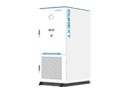
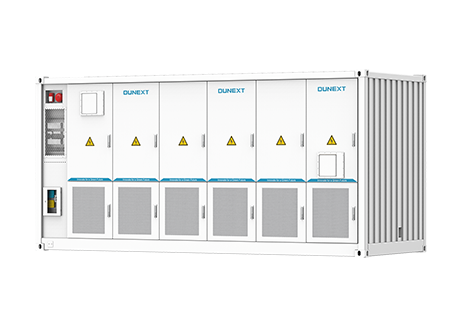
Project scale is where Dunext’s product range becomes relevant: our portfolio extends from approximately 50 kWh to systems exceeding 5 MWh, including PowerHill-261kWh,PowerHill-233kWh, PowerHill-215kWh, PowerRock+DN3H-H3 at 50 kW/100 kWh, PowerRack+DN3H at 56 kWh, PowerMount 2 MWh, and PowerMount 5 MWh. Those capacity tiers let storage follow the actual load profile instead of treating every solar-plus-storage project alike.
For a smaller commercial site, the key question may be whether storage can cover a recurring late-day peak. A larger industrial site may combine solar shifting with load management and backup requirements.
Utility-scale projects can operate under market or grid-service models that are not reflected on a conventional commercial electricity bill. Each case needs its own baseline, with expected savings compared against the same site operating without storage.
A Practical Way to Estimate the Savings Range
Interval data provides the evidence base for a credible estimate of energy storage solutions. The site can calculate how much solar energy is surplus during each period, how much later demand could be served from storage, what electricity prices apply, and whether demand charges can be reduced. The annual value is then compared with system cost, expected usage, and the operating strategy.
Operational scale supports that calculation framework: the storage business reports more than 3 GWh of shipments and over 15 years of R&D expertise. Five overseas subsidiaries and two manufacturing centers form the operating footprint behind that business.
R&D, production, and service are connected through the same storage organization. Those capabilities matter because a savings model must ultimately become equipment sizing, control logic, installation, and operation.
A fixed claim such as “solar storage always cuts bills by a fixed percentage” is not a responsible estimate. The possible reduction is a site-specific outcome produced by tariff structure, solar surplus, demand behavior, battery sizing, and dispatch rules.
Our approach is to make those variables visible first, then determine how storage can shift energy, limit peaks, or support other operating goals. The strongest estimate for solar energy storage is the one that can be traced back to measured load data and a clearly defined operating strategy.